Lucy & Yak asked Absurd to redesign and rebuild its Shopify store to improve customer experience, simplify the path to purchase, and create a faster, more maintainable foundation for growth.
The starting point was a site held back by ageing plugins, inconsistent design decisions, and user journeys that were harder to navigate than they needed to be. Performance was also suffering, which made every improvement harder to feel and every release harder to manage.
Project overview
The brief combined UX, visual design, conversion thinking, and engineering delivery.
The main issues to solve were:
- An outdated stack and plugin setup that was no longer supporting performance or usability.
- Information architecture and key user flows that created friction for customers.
- A fragmented visual system where templates and third-party tooling broke consistency across the store.

Research and shaping
Absurd approached the work as a staged redesign rather than a surface-level refresh. The process covered technical discovery, UX design, visual design, technical specification, and software development.
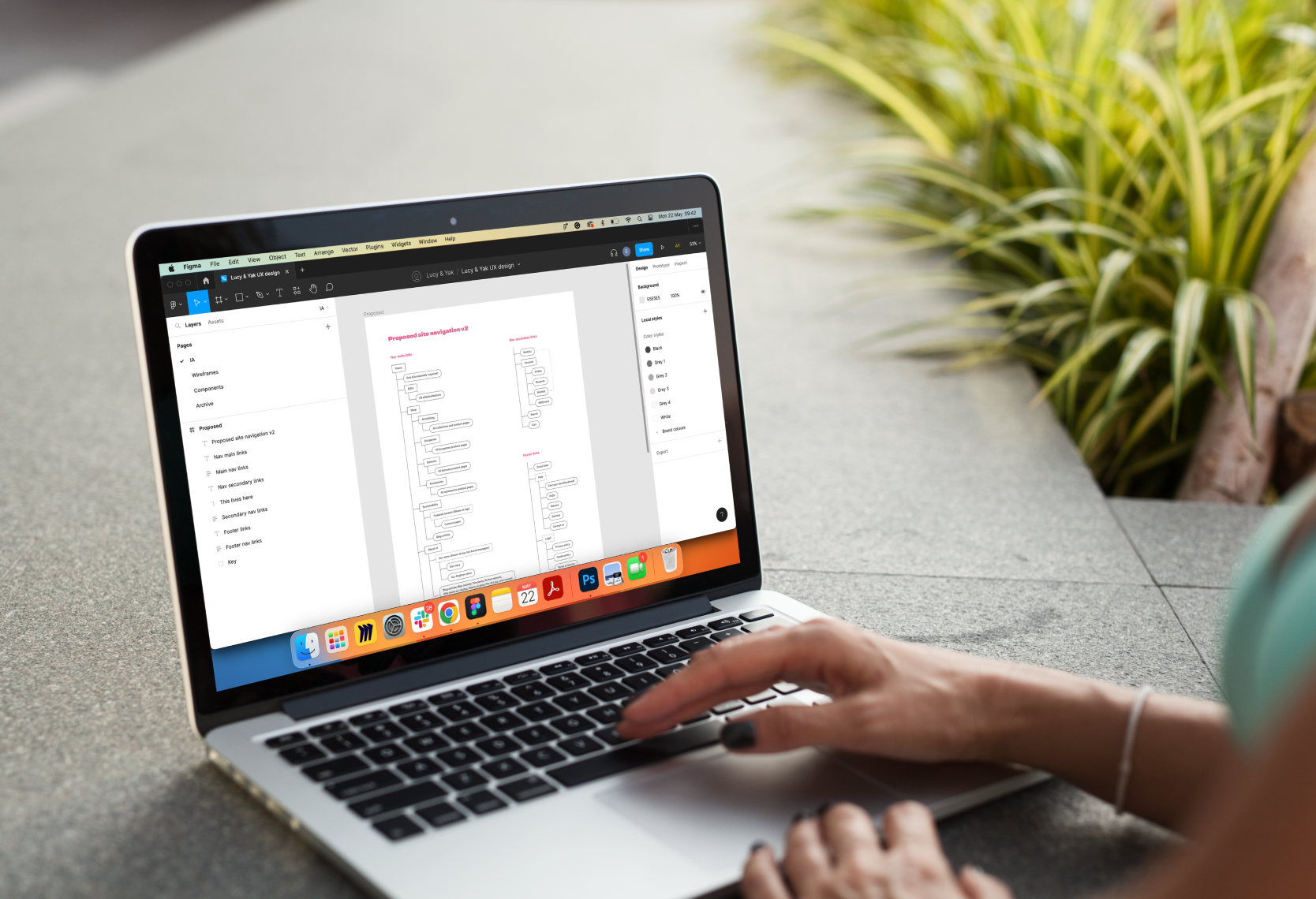
That meant reviewing the existing stack, understanding customer needs, reshaping the information architecture, defining the most important user journeys, and documenting user stories and acceptance criteria before implementation moved forward.

What changed
The rebuild focused heavily on speed and maintainability. The new storefront was developed on top of Shopify 2.0 Dawn using a custom theme, giving the team more control without carrying forward the overhead of the previous setup.
To protect performance, custom functionality and third-party integrations were handled through APIs instead of relying on pre-built components that would add unnecessary weight. A new flyout cart improved the add-to-cart experience, and search was rebuilt with Algolia to make browsing faster and smoother.
Alongside the front-end work, Absurd documented user stories and acceptance criteria for the new templates, resolved inherited defects, and supported the path through staging, testing, and production deployment.


Delivery and support
The work did not stop at design hand-off. Absurd supported defect fixing, browser testing, deployment, and the final move into production, helping Lucy & Yak transition cleanly into the new setup.
The in-house digital team was also supported operationally, including the introduction of Shopify's GitHub CLI workflow to make future releases easier to control. The project also included support for an integration with an independent clothing recycling partner, allowing customers to recycle garments and receive vouchers to use online. That integration spanned both Shopify and Klaviyo.
Outcomes
The results were measurable:
- 15% increase in revenue.
- 21% increase in conversion.
- Faster add-to-cart and search interactions.
- A more consistent customer experience across templates.
- A stronger delivery foundation for the in-house team to build on after launch.
The value of the project was not just a better-looking store. It was a faster, cleaner, more resilient Shopify setup that improved commercial performance while giving Lucy & Yak a better platform for ongoing iteration.