tado° asked Absurd to simplify its website experience and make it easier for customers to understand, compare, and move towards the right smart home products.
The challenge was not a lack of ambition. It was the structure around the products. The way tado°’s range was organised made navigation harder than it needed to be, which created unnecessary friction across discovery, consideration, and purchase.
Project overview
The brief focused on user flow, content presentation, and the underlying information architecture of the site.
Absurd was brought in to:
- identify where customer journeys were breaking down
- reduce complexity across the site structure
- improve the route from exploration through to installation
- use tado°'s existing components and templates more effectively
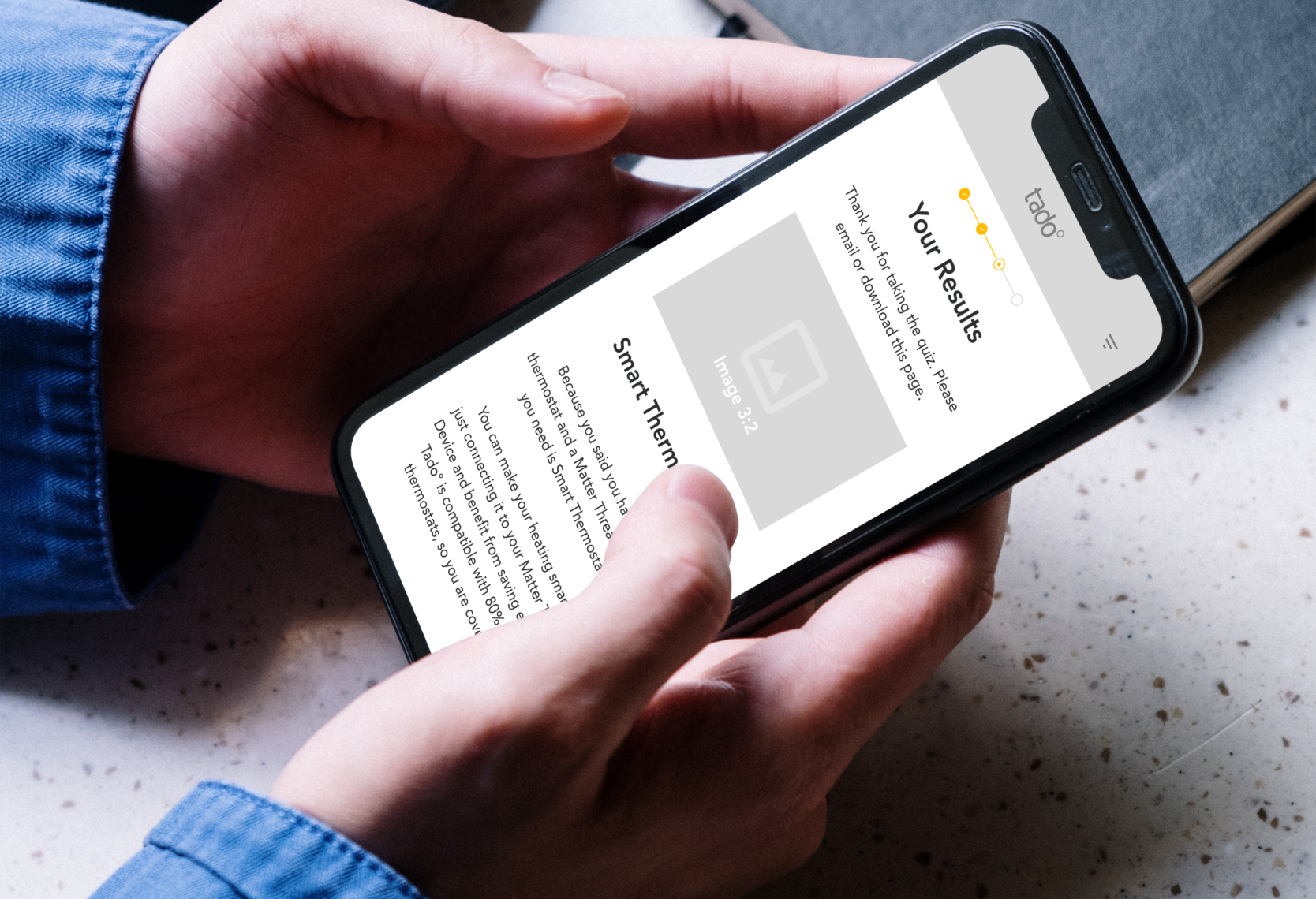
Research and discovery
The work started with research rather than redesign theatre. Absurd used stakeholder interviews, observational research, and existing analytics to understand how people were moving through the site and where those journeys became unclear.
That research exposed gaps in the existing flows and helped define where new paths, clearer messaging, and better content structure were needed. The goal was not simply to make the site look cleaner. It was to make the decision-making process easier for real customers.
Approach
The redesign process combined several strands of work:
- gap analysis across the current experience
- iterative design cycles to test and improve new flows
- rapid prototyping to move quickly without locking in weak decisions
- IA work and user testing to validate how products and pages should be organised
- stakeholder input to make sure the new structure reflected business and product realities
Outcome
The result was a website with lower complexity and clearer routes through the experience. Customers can now move more easily from discovery to purchase and installation, and the journeys are supported by a more deliberate content structure.
The project gave tado° a stronger UX foundation without requiring a full visual reinvention. It improved the way the existing system worked, which is often the more commercially useful move.